Nancy M. Young'
  • Home
  • Excerpts
  • Blog

Five Old Movies You Probably Never Saw That Scared the Bejesus Out of Me

Posted by Nancy M. Young 
· Tuesday, September 22nd, 2015 

I grew up in the Philadelphia suburbs, where every week I was glued like coagulated blood to Dr. Shock’s Horror Theater (pronounced “thee-dur” in the appropriate Philly accent).  The host would sign in with “Let there be fright!”

I still love the genre; I even taught a film seminar on horror movies.  The movies on this list had me frozen to the flickering black and white screen.

Carnival of Souls (1962)—now a cult film.  Its camera work is very German expressionist. The organ score’s riveting, and the scene in the abandoned amusement park is such stuff as nightmares are made on.  I know that because I still dream about it.

Dead of Night (1945) is a British horror anthology. House party attendees entertain with tales of a hearse driver, a Christmas party, a haunted mirror, a golf game, and (most disturbing) a ventriloquist’s dummy. (Note this one predates Twilight Zone by many years.) Some notable actors appear, including Michael Redgrave and Sally Ann Howe.

The Haunting (1963) –not the regrettable remake, but the original black and white Robert Wise movie with Julie Harris. I still won’t sleep with my hand sticking out from under the covers for fear something will hold it in the night, in the dark . . . .  This film is based on the Shirley Jackson novel. (You probably had to read her short story “The Lottery” at one time.)

La invasión de los vampiros  (1963) The American version is dubbed, and badly at that, but the black and white cinematography is both expressionistic and atmospheric. Two scenes still haunt me. In the opening sequence, villagers anxiously wait for night. One foolhardy man trails a mysterious woman in white who glides into town, through the woods, and past an eerie lake, where she strips and we see her bare feet step into the water—before an agonized scream rents the soundtrack. The second scene burned into my brain comes near the end, when the hero spears Count Frankenhausen (yes, really). At the moment of his death,  his victims (who too have been staked) rise from their coffins and surround the hacienda. The worst part is the dead call out to those trapped inside.

Invisible Invaders (1959) with John Agar and John Carradine. This movie came out ten years before Romero’s Night of the Living Dead.  Invisible aliens inhabit human corpses. The subtext is the threat of communism and nuclear holocaust, but that scene near the end where the dead surround the bunker scarred my childhood.
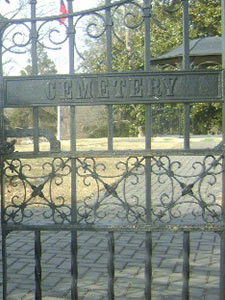

 

cemetery gate

Share this:

  • Share on Facebook (Opens in new window) Facebook
  • Share on X (Opens in new window) X
  • Share on Pinterest (Opens in new window) Pinterest
  • Email a link to a friend (Opens in new window) Email
  • Print (Opens in new window) Print

The Catcher in the Rye with a Duke in It

Posted by Nancy M. Young 
· Tuesday, September 1st, 2015 

Another installment of classics with a twist–sorry, Salinger, but this version could make the USA Today list.

Smart, troubled, virginal Holden, disguised as a boy, runs away from finishing school and embarks on a New York adventure. While standing in Central Park comparing her plight to that of the dismal ducks doomed to swim in circles before her, she encounters the wicked, womanizing Duke Antolini. The Duke, seeing through her disguise, determines to further her education.central-park-652792_1280

Share this:

  • Share on Facebook (Opens in new window) Facebook
  • Share on X (Opens in new window) X
  • Share on Pinterest (Opens in new window) Pinterest
  • Email a link to a friend (Opens in new window) Email
  • Print (Opens in new window) Print

Call of the Wild with a Duke in It

Posted by Nancy M. Young 
· Tuesday, September 1st, 2015 

Sir_Arthur_Wellesley_1st_Duke_of_WellingtonAt an RWA conference, a bestselling author advised that one way to guarantee that a novel would sell is to “put a duke in it.” Apparently, an earl or marquess won’t do. (She did say that a billionaire would suffice in a contemporary romance.) With apologies to Jack London, then, here is an attempt to revisit the classics by the addition of a duke.

Buck, the spoiled and discriminating Duke of Ravenswood, is kidnapped on his way to America by a pack of miscreants afflicted with gold fever, including sassy but virginal Mercedes. Shedding the veneers of aristocracy, Buck comes to terms with his manhood and conquers the Yukon–and Mercedes, who heeds her own call of the wild.

Share this:

  • Share on Facebook (Opens in new window) Facebook
  • Share on X (Opens in new window) X
  • Share on Pinterest (Opens in new window) Pinterest
  • Email a link to a friend (Opens in new window) Email
  • Print (Opens in new window) Print
books on tables and shelves

Literary v. Commercial Fiction

Posted by Nancy M. Young 
· Monday, June 29th, 2015 

“You can’t live on Doritos.” That’s what one writer told me, his bow tie incongruent in the hazy atmosphere of the dive bar. “Sure,” he added, “those chips deliver a powerful crunch and a pop of flavor, but they won’t satisfy for the long haul.” He wasn’t talking about Doritos. He was talking about commercial fiction.

If you cornered three successful authors in that same dive bar without a publicist or agent or critic in hearing distance and asked if they wrote literary or commercial fiction, I bet a beer they’d say they don’t know and don’t care as long as the royalty checks keep coming.   And if you pressed, maybe plied them with a free round to explain the difference between the types, they’d probably fall back on the circular argument that literary fiction has literary merit.

Let’s say you pushed for more, beyond the tautology. Then you’d hear words like “serious” and “layered” and “elegant,” as if fiction were some ruffled gown at an ingénue’s first ball.  You’d undoubtedly also hear that the literary work is critically acclaimed and can withstand the test of time.  Beyond my suspicion that literary fiction is largely in the eye of the beholder, I start to itch at the smugness and vagueness of these definitions.

Here’s an attempt to clarify. If NPR reviews a book, it’s literary fiction. If it’s on a list of beach reads, it’s commercial.

If characters are goal-oriented and things actually happen in the novel, it’s commercial fiction. If, instead, things happen, but most of the book focuses on how the characters feel about it, not just in passing, but page after page, it’s literary fiction. And if things happen, but characters rehash what happened for only a paragraph or so, it’s upmarket.

For example, remember the miasma that emanated from the infectious tarn in Poe’s Usher story? Well, if a character notes said miasma or tarn in passing, perhaps at the beginning of a chapter as the author establishes setting, then it’s commercial. But if the character actually stops and gazes pensively into that tarn and then reflects on the deep well of despair within his own poor, aching bosom, well, that’s literary. It’s upmarket if the tarn is somehow linked to an overarching theme, such as still waters run deep.

The reader could skim the description in the first example and lose little of the plot, which would still advance apace. Not so in literary fiction. Skimming the description would be an exercise in futility, for the story is the description.  Readers are invited to “linger”—another watchword for the literary genre. Plot is incidental.

There are limpid pools I’d gladly linger in, lolling about the chapters like a tot on an inner tube. I’ll admit to diving deep and losing myself in the flow of a well-written passage. And yet I’m unconvinced such a thing as literary fiction exists.  Nooks and Kindles glow with good writing and mediocre writing and god-awful bad writing. The good writing is well paced, coherent, inventive, and compelling. It keeps the reader engaged. Now, I can be just as engaged by a bag of Cool Ranch Doritos as I can by tofu and asparagus Pad Thai. I just don’t think I’d want a steady diet of either.

Share this:

  • Share on Facebook (Opens in new window) Facebook
  • Share on X (Opens in new window) X
  • Share on Pinterest (Opens in new window) Pinterest
  • Email a link to a friend (Opens in new window) Email
  • Print (Opens in new window) Print
← Previous Page

Recent Posts

  • Reading at the Brandy Bar May 13, 2026
  • Poetry in Plain Sight Poems
  • 100 Top Horror Movies Score
  • Poetry in Plain Sight
  • Reading Oct. 27 at Quail Ridge Books, Raleigh
Nancy M. Young
Copyright © 2026 All Rights Reserved
Website Design by Peacock Creative Services